

The Indian Foreign Ministry announced that both nations also signed agreements related to strategic petroleum reserves and the supply of liquefied petroleum gas. The development comes as New Delhi seeks to secure long-term energy stability and deepen strategic cooperation with Abu Dhabi amid disruptions across the Gulf region.
According to the ministry’s statement, the strategic defence partnership will focus on expanding defence industrial collaboration and cooperation in innovation and advanced technology. The agreement also includes cooperation in training, military exercises, maritime security, cyber defence, secure communications, and information exchange.
Ahead of Modi’s visit, Indian sources indicated that the Prime Minister was expected to discuss long-term energy supply arrangements with the UAE leadership and seek support for expanding India’s strategic oil reserves. The discussions gained urgency as global energy markets continue to face instability due to the United States and Israeli military campaign against Iran, now entering its third month.
The conflict has significantly affected global oil trade after the closure of the Strait of Hormuz, one of the world’s most critical energy chokepoints responsible for nearly 20 percent of global oil flow. The war also disrupted transportation and commercial activities throughout the Gulf after Iranian missile and drone strikes targeted several Gulf nations, including the UAE, before a fragile ceasefire was reached last month.
The UAE’s recent decision to leave OPEC is also expected to increase its oil production capacity, potentially benefiting major importers such as India by improving energy supply access during a period of heightened uncertainty.
The latest agreements build on earlier energy and defence engagements between New Delhi and Abu Dhabi. In January, India signed a $3 billion agreement to purchase liquefied natural gas from the UAE, which remains India’s third-largest trading partner. Both sides had also signed a letter of intent aimed at advancing a strategic defence partnership.
The growing India-UAE relationship comes against the backdrop of Pakistan’s expanding defence and diplomatic engagement with Saudi Arabia. Last year, Pakistan and Saudi Arabia signed a mutual defence agreement, raising strategic concerns in New Delhi regarding shifting alliances in the Gulf region.
Pakistan has since emerged as a key mediator between the United States and Iran in efforts to end the ongoing war. Islamabad has also strengthened Saudi Arabia’s defence preparedness after the kingdom faced hundreds of Iranian missile and drone attacks during the conflict.
Last month, Riyadh announced an additional $3 billion support package for Pakistan to help bridge a major financial gap linked to an upcoming debt repayment obligation to the UAE.
In its statement on Friday, the Indian government also highlighted UAE investment commitments worth $5 billion. The ministry pointed to previous major transactions, including Emirates NBD’s acquisition of a 60 percent stake in RBL Bank last year for $3 billion and Abu Dhabi-based IHC’s $1 billion investment in Sammaan.
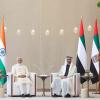
The agreements signed during Modi’s visit underline the rapidly expanding strategic and economic partnership between India and the UAE as both nations attempt to secure energy stability, strengthen defence coordination, and navigate an increasingly volatile geopolitical environment across the Gulf region.
About The Author








Comment List